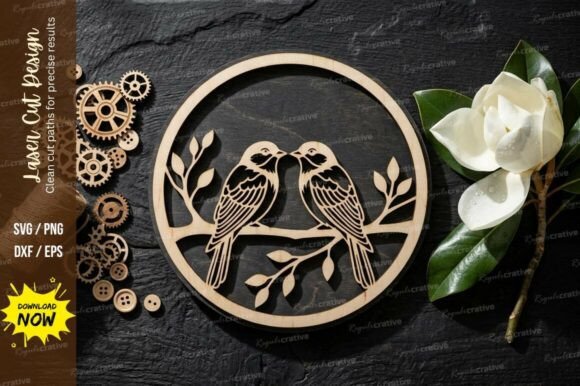
Evaluating Bird Branch Frame Laser Cut SVG Files for Precision DIY Projects
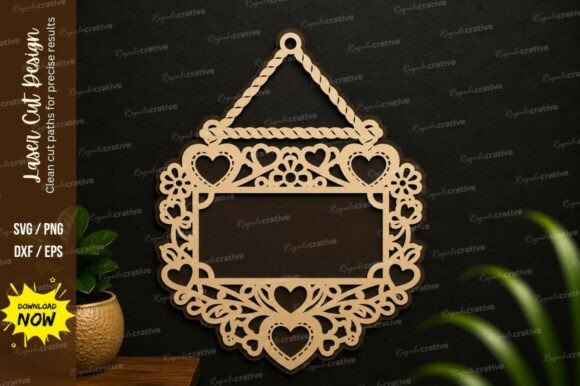
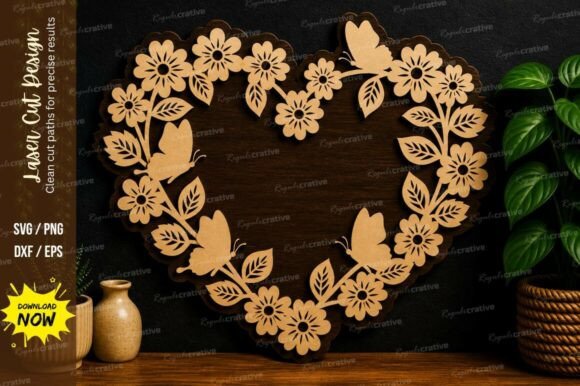
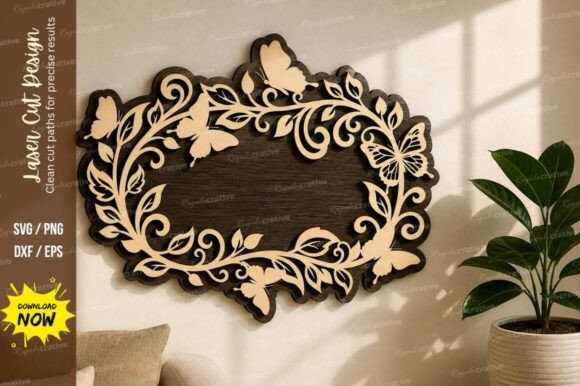
For makers and designers working with laser cutters, the foundation of a successful project lies in the quality of the digital file. The Bird Branch Frame Laser Cut Svg Cutting design represents a specific category of vector art tailored for nature-inspired decor, signage, and functional frames. Unlike generic clipart often found on free repositories, premium design sets in this niche are engineered specifically for the physical constraints of laser cutting and CNC machining. Understanding the distinction between a standard image and a production-ready vector is crucial for anyone looking to minimize material waste and machine time while maximizing aesthetic appeal.
When evaluating a Bird Branch Frame Laser Cut Svg Cutting package, one must look beyond the visual preview. The core value proposition of a high-quality set is its structural integrity. These files are not merely drawings; they are mathematical paths defined to ensure that a laser beam can follow them without hesitation. A premium package typically includes multiple formats such as SVG, EPS, PNG, and DXF. This variety is not redundant; it addresses the fragmented landscape of design software and hardware controllers. While SVG is the universal standard for web-based design tools like Cricut Design Space or Silhouette Studio, DXF remains the preferred format for industrial CAD software and older CNC controllers. Having access to both ensures compatibility regardless of the user's workflow.
Technical Distinctions: Vector Quality vs. Raster Images
A primary factor in choosing a dedicated laser cutting file set is the difference between vector and raster graphics. Many beginners mistakenly attempt to use high-resolution PNG images for cutting. While a PNG included in a Bird Branch Frame Laser Cut Svg Cutting bundle is useful for previewing the design or using it in sublimation printing, it cannot drive a laser cutter for precise outlines. Vector formats (SVG, EPS, DXF) define shapes through points and lines, allowing the design to be resized infinitely without losing quality. This scalability is vital when adapting a bird branch frame to fit different hoop sizes, shadow box depths, or wall dimensions.
Furthermore, "clean" vector design implies more than just smooth curves. It refers to the topology of the path. In lower-quality files, nodes may be excessive, lines may overlap unintentionally, or paths may remain open where they should be closed. These errors force the laser operator to spend significant time repairing the file before cutting can begin. A professionally prepared Bird Branch Frame Laser Cut Svg Cutting file undergoes a rigorous cleanup process. Nodes are optimized to reduce cutting time, and all paths are welded and closed to prevent the laser from making unnecessary travel moves. This attention to detail directly translates to smoother edges on materials like wood and acrylic, reducing the need for post-processing sanding or filing.
Material Compatibility and Design Adaptability
The versatility of a laser cut design is often determined by how well it accounts for material properties. The bird branch motif, with its intricate twigs and organic curves, presents unique challenges depending on the substrate. When working with wood, the kerf (the width of material removed by the laser) can affect how tightly joints fit if the frame is assembled. High-quality DXF and SVG files often account for standard kerf widths or are designed with tolerance in mind. For acrylic, the focus shifts to edge clarity; a clean vector ensures the flame-polished edge remains consistent around complex branch details. Even for paper crafts or cardstock, the precision of the cut prevents tearing along delicate grain lines.
Comparing this specific style to other framing options reveals distinct advantages. Geometric frames, composed of straight lines and sharp angles, are generally easier to cut and assemble but can lack the organic warmth of a bird branch design. Conversely, highly detailed photorealistic engravings require extensive raster processing and longer run times. The Bird Branch Frame Laser Cut Svg Cutting approach strikes a balance. It offers the visual complexity of nature through vector lines, which cuts faster than raster engraving yet provides more visual interest than simple geometric borders. This makes it an ideal choice for projects where production speed and aesthetic depth must coexist.
Decision Factors: When to Choose This Design Style
Selecting the right file set depends heavily on the intended application and the operator's skill level. For users creating wedding decor, nursery art, or boutique home goods, the bird branch theme offers a timeless, neutral aesthetic that appeals to a broad demographic. The inclusion of multiple formats in a single download simplifies the workflow for professionals who may switch between software platforms—using Illustrator for editing and LightBurn for machine control, for instance.
However, there are scenarios where this specific design might not be the optimal choice. If a project requires extreme structural load-bearing capacity, the delicate nature of thin branches in a vector cut might necessitate a thicker, more robust frame design. Similarly, if the goal is to create a fully enclosed seal for a terrarium or aquarium, the openwork nature of a branch frame would be unsuitable without additional backing materials. It is also worth noting that while these files are "ready to cut," the final result is still dependent on the machine's calibration and the material's consistency. A perfect SVG cannot compensate for a misaligned lens or warped plywood.
Workflow Efficiency and File Management
One of the understated benefits of purchasing a comprehensive package containing SVG, EPS, PNG, and DXF is the reduction in administrative overhead. Sourcing individual files from different creators often leads to inconsistencies in layer organization, scale, and line weight. A unified set ensures that all variations of the bird branch frame share the same origin point and scaling logic. This consistency is particularly valuable for batch production. If a maker intends to cut fifty frames for a market stall, knowing that every file in the set behaves predictably saves hours of troubleshooting.
Moreover, the ease of resizing without quality loss allows for rapid prototyping. A designer can quickly test a small-scale version on scrap material to verify fit and finish before committing expensive hardwood or cast acrylic to the full-sized job. This iterative process is facilitated by the clean node structure of premium vectors. In contrast, attempting to upscale a low-quality trace often results in jagged edges or distorted proportions, forcing a restart of the design phase.
Limitations and Considerations for Advanced Users
While instant download files offer convenience, advanced users should be aware of potential limitations regarding customization. Most pre-made Bird Branch Frame Laser Cut Svg Cutting files are sold as finished assets. While they can be scaled and rotated, modifying the internal structure—such as thickening specific branches or adding custom text within the frame—requires vector editing skills and software like Adobe Illustrator or Inkscape. Users without access to these tools may find themselves limited to the designs exactly as provided. Additionally, while the files are compatible with most machines, specific settings for power, speed, and frequency must always be determined by the user based on their specific equipment and material combination. No digital file can automate the physical tuning of the laser.
In conclusion, the decision to utilize a Bird Branch Frame Laser Cut Svg Cutting set should be driven by a need for reliability, aesthetic versatility, and workflow efficiency. For those balancing creative vision with production realities, the availability of clean, multi-format vectors provides a solid foundation. Whether the end product is a delicate paper invitation, a sturdy wooden wall hanging, or a modern acrylic display, the quality of the source file dictates the ceiling of the final output. By prioritizing files that are explicitly prepared for laser constraints, makers can avoid common pitfalls and focus on the craftsmanship of the physical build rather than fighting with digital artifacts.