Mastering the Butterfly Leaf Oval Frame Laser Cut for Flawless DIY Projects
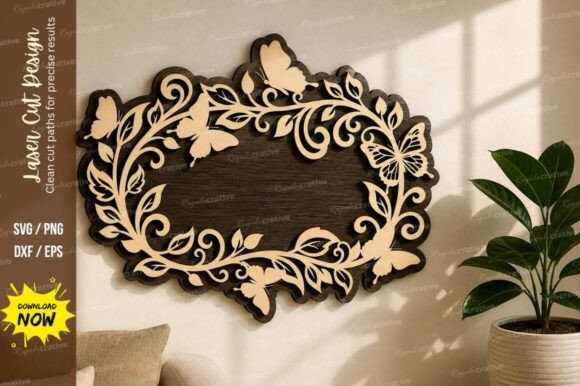
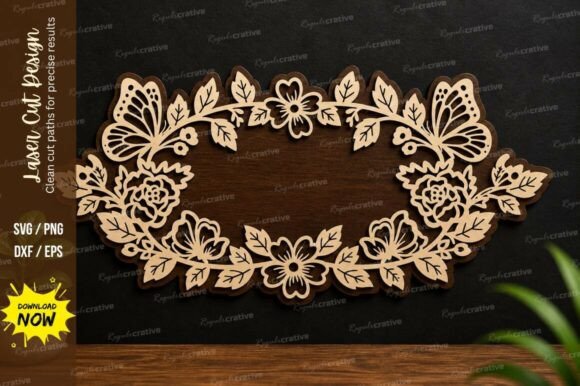
There is a distinct satisfaction in watching a laser cutter bring a digital design to life, especially when the result is as elegant as a Butterfly Leaf Oval Frame Laser Cut. This specific design combines organic nature motifs with geometric precision, making it a favorite for wedding decor, home accents, and personalized gifts. However, the difference between a stunning centerpiece and a pile of scorched, broken material often lies not in the machine, but in how the file is selected, prepared, and executed. Many enthusiasts jump straight into cutting without fully evaluating their digital assets, leading to wasted time and materials.
Understanding the nuances of this premium quality laser cutting design file set is essential for anyone looking to produce professional-grade results. Whether you are a hobbyist working in your garage or a small business owner fulfilling orders, the foundation of your project is the file itself. This package typically includes multiple popular formats such as SVG, EPS, PNG, and DXF, ensuring compatibility with a wide range of laser cutting machines and design software like LightBurn, Illustrator, or CorelDRAW. Yet, simply having these files is not enough; knowing how to leverage them correctly is where true craftsmanship begins.
Avoiding the Trap of Low-Resolution Imports
One of the most frequent misunderstandings involves the choice of file format based on convenience rather than function. Beginners often default to the PNG file included in the set because it opens easily in any image viewer. While the PNG provided in high-quality sets is useful for previews or raster engraving, using it for vector cutting is a critical error. Raster images rely on pixels, which means the laser interpreter sees a grid of dots rather than a continuous path. When you attempt to cut a frame from a PNG, the machine may try to engrave the outline pixel by pixel, resulting in jagged edges, excessive burn marks, and a fragile structure that falls apart.
To avoid this, always prioritize the vector formats: SVG, EPS, or DXF. These files contain mathematical paths that tell the laser exactly where to move, ensuring smooth and precise cutting regardless of the size. A common mistake is resizing a raster image to fit a frame and expecting clean lines. In contrast, a true vector design like the Butterfly Leaf Oval Frame allows you to resize without losing quality. You can scale it up for a large wall hanging or down for a jewelry pendant, and the cut lines remain crisp. Before sending any job to your machine, open your software and verify that the design consists of editable nodes and paths, not a flattened bitmap.
Material Compatibility and Kerf Considerations
Another area where creators often stumble is assuming a "one-size-fits-all" approach to materials. The beauty of this design set is its versatility for wood, acrylic, metal, paper, and other DIY projects. However, each material reacts differently to laser heat and speed. A setting that perfectly cuts 3mm birch plywood might shatter cast acrylic or fail to penetrate thick cardboard. A frequent oversight is neglecting the "kerf," which is the width of material removed by the laser beam. In intricate designs with interlocking parts or tight leaf details, failing to account for kerf can result in pieces that are too loose to hold together or so tight they crack upon assembly.
When working with the Butterfly Leaf Oval Frame, take the time to run test cuts on scrap pieces of your intended material. Adjust your power and speed settings to find the sweet spot that yields a clean edge without excessive charring. If your project involves assembling multiple layers, consider offsetting your cut lines slightly in your design software to compensate for the material lost during cutting. This proactive step ensures a snug, professional fit. Furthermore, while the design is compatible with most laser CNC machines, remember that diode lasers behave differently than CO2 lasers. Diode users may need to slow down their feed rates significantly to achieve the same clean cut on acrylic that a CO2 machine achieves quickly.
The Importance of File Preparation and Cleanup
Even with a high-quality and clean vector design, issues can arise if the file is not properly prepared within your specific software environment. Sometimes, imported DXF or SVG files contain duplicate lines, open paths, or microscopic gaps that are invisible to the naked eye but disastrous for the laser. The machine might trace the same line twice, causing unnecessary burning, or it might skip a section entirely because the path isn't closed. This leads to incomplete cuts and frustrated users who blame the file quality rather than the setup.
Before hitting the start button, utilize the "node editing" or "path cleanup" tools available in your design software. Look for overlapping lines and delete duplicates. Ensure that every shape intended to be cut is a closed loop. For the delicate butterfly and leaf elements in this oval frame, pay close attention to the tiny bridges or connections. If these are too thin, they may burn through before the rest of the cut is complete. Conversely, if they are too thick, the piece won't pop out cleanly. A practical approach is to zoom in to 400% or higher and visually inspect the junctions where the leaves meet the frame. Making these small corrections digitally saves a significant amount of physical waste and post-processing sanding.
Maximizing Efficiency and Professional Results
For entrepreneurs and freelancers, time is money. An inefficient workflow can eat into profit margins, especially when producing batches of these frames. A common inefficiency is poor nesting—arranging the designs on the material sheet without regard for grain direction or material defects. When cutting wood, ignoring the grain can lead to warping or uneven strength in the final frame. Similarly, failing to organize cut order can cause the laser head to travel unnecessarily long distances between cuts, increasing total production time.
Optimize your workflow by arranging multiple instances of the Butterfly Leaf Oval Frame to minimize waste material. Most laser software allows you to set cut priorities; configure the machine to cut internal details (like the spaces within the leaves) before cutting the outer perimeter. This ensures the material remains stable and supported until the very last moment, preventing shifting that could ruin the alignment. Additionally, keep your lens and mirrors clean. A dirty lens can scatter the beam, widening the kerf and reducing the sharpness of those fine leaf details. Regular maintenance combined with smart file management turns a good design into a great product.
Ultimately, the value of an instant download easy to use package lies in how well you integrate it into your creative process. By respecting the differences between file formats, understanding your material's behavior, and meticulously preparing your digital workspace, you elevate the final output. The Butterfly Leaf Oval Frame Laser Cut is a robust starting point, but your attention to detail is what transforms it from a simple file into a cherished object. Take the extra few minutes to check your settings and paths; the flawless finish of your project will be the proof of your diligence.